Oh my gosh, let me tell you about the first time I made Korean beef rice bowls – total kitchen magic happened! I was scrolling through TikTok one night, absolutely starving, when I saw this gorgeous sizzling beef with that rich red sauce. “That’s dinner tomorrow,” I thought. Next day, I whipped it up faster than you can say “takeout” and wow – my husband actually paused his video game to ask for seconds!
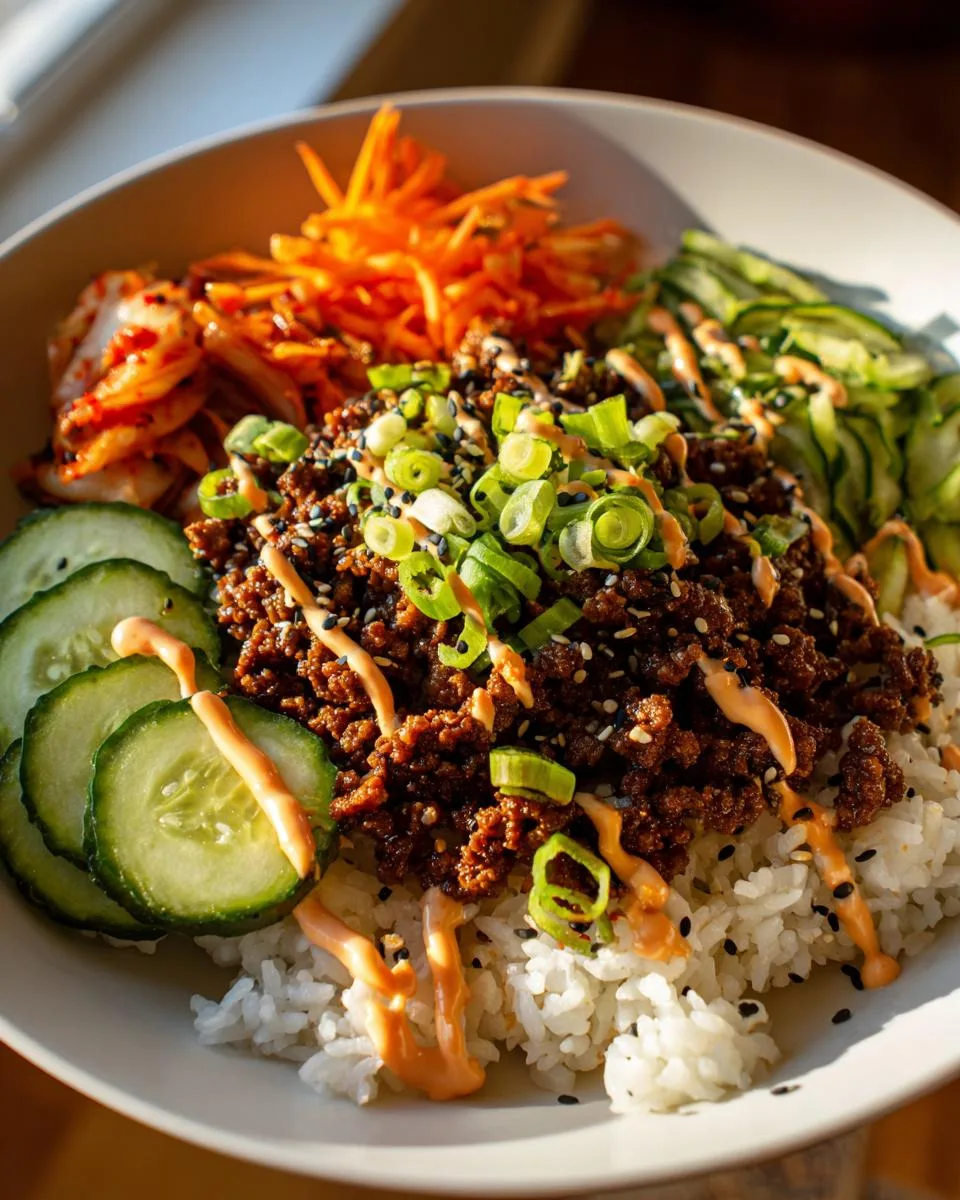
Table of Contents
Table of Contents
Why You’ll Love These Korean Beef Rice Bowls
What makes these bowls so special? That perfect balance of sweet-spicy gochujang sauce, savory beef, and cool crunchy veggies hits every taste bud. And here’s the best part: you probably have most ingredients already. Just grate some fresh garlic and ginger (trust me, fresh makes ALL the difference), stir up that simple sauce, and you’re halfway there. The whole thing comes together in under 30 minutes – MENSA-level fast for how impressive it tastes!
After making this weekly for months (okay, sometimes twice a week), I’ve perfected the little tricks that take it from good to “close the restaurant, we’re eating at home” amazing. The secret? That creamy-spicy mayo drizzle – don’t skip it! And always, always serve with extra kimchi. Let me show you how it’s done…
Let me count the ways these bowls became my weeknight superhero! First time I made them, I couldn’t believe something so delicious came from my kitchen in less time than waiting for pizza delivery. Here’s what makes them magic:
- Lightning fast: 25 minutes start to finish – that’s faster than my kids can say “I’m hungry” for the third time
- Flavor bomb: That sweet-spicy sauce with the creamy mayo drizzle? Absolute tastebud fireworks
- Your heat, your rules: Gochujang newbie? Start with ½ tablespoon. Spice lover? Pile it on!
- Kitchen sink friendly: Swap veggies based on what’s in your fridge – zucchini works great too
- All-in-one meal: Protein, veg, carbs -balanced perfection in a bowl
Seriously, these Korean beef rice bowls ruined takeout for me. Why pay delivery fees when you can make something tastier before the driver even finds your house?

Ingredients for Korean Beef Rice Bowls
Okay, let’s raid the fridge and pantry! Here’s everything you’ll need for these flavor-packed bowls. I’ve grouped them by component because that’s how my brain works when cooking – sauce stuff together, toppings together, you know? Trust me, measuring everything out first makes this recipe fly by.
For the Stir-Fry Sauce
- 1 tsp freshly grated garlic (none of that jarred stuff – it’s worth peeling a clove!)
- 1 tsp freshly grated ginger (I keep mine frozen for easy grating)
- 3 tbsp all-purpose soy sauce (the regular kind, not light or dark)
- 2 tbsp packed brown sugar (press it into your measuring spoon)
- 1 tbsp sesame oil (the toasted kind – smells like heaven)
- 1 tbsp gochujang (Korean red pepper paste – start with less if you’re spice-shy)
- 1 tsp rice vinegar (that subtle tang makes all the difference)
- 1 tbsp sesame seeds (plus extra for garnish because pretty)
For the Beef & Assembly
- 2 tbsp extra-virgin olive oil or neutral oil (I use avocado oil when searing)
- 500 g (1 lb) minced beef (80/20 fat ratio gives best flavor)
- 2 spring onions, finely sliced (save 1 tbsp of the green parts for garnish)
For the Gochujang Mayo
- 3 tbsp whole-egg mayonnaise (Kewpie mayo makes it extra creamy)
- 1 tsp gochujang (same as above – adjust to your heat tolerance)
- ½ tsp sesame oil (yes, more sesame – can you tell I’m obsessed?)
- ½ tsp rice vinegar (balances the richness)
Toppings
- 2 cups (370 g) cooked jasmine rice (short-grain works too)
- 1 cup (240 g) kimchi (the funkier the better in my book)
- 1 carrot, julienned (I use a mandoline for perfect matchsticks)
- 1 Lebanese cucumber, sliced into half moons (English cukes work too)
Ingredient Notes & Substitutions
Here’s where we get flexible! My grandma always said recipes are guidelines, not rules (unless we’re talking her kimchi – then you follow EXACTLY).
- Soy sauce swap: Use tamari for gluten-free (same measurements)
- Sweetener options: Honey or maple syrup can replace brown sugar – start with 1 tbsp and adjust
- Protein play: Ground turkey or chicken work great (add 1 tbsp extra oil since they’re leaner)
- Gochujang heat: Mild versions exist! Look for “mat” (맛) on labels
- Mayo options: Vegan mayo works perfectly – I like the avocado oil based ones
- Veggie variations: Try quick-pickled radish or shredded purple cabbage for crunch
See? So many ways to make these Korean beef rice bowls your own. Now let’s get cooking!
How to Make Korean Beef Rice Bowls
Okay, let’s get cooking! I promise this comes together faster than you can say “banchan.” I’ve broken it down into three foolproof steps that even my 12-year-old nephew can follow (and he burns toast). The key is having everything prepped and ready – mise en place makes all the difference here!
Step 1: Prepare the Stir-Fry Sauce
Grab a small bowl and let’s make magic happen. Whisk together the garlic and ginger first – really get those aromatics mingling. Then add the soy sauce, brown sugar (make sure it’s fully dissolved – no gritty bits!), sesame oil, gochujang, and rice vinegar. Keep whisking until it’s smooth as silk. The sauce should coat the back of your spoon nicely – not too thick, not too watery. Taste it (careful, it’s strong!) and adjust if needed. More gochujang for heat, more sugar for sweetness. Set this flavor bomb aside while we cook the beef.
Step 2: Cook the Beef
Heat your oil in a large frying pan over medium-high heat – you want it shimmering but not smoking. Add the beef and here’s my trick: let it sit undisturbed for 30 seconds to get a good sear before breaking it up. Use a wooden spoon or spatula to crumble it into small pieces as it cooks. We’re going for golden brown bits everywhere – about 5 minutes total. Drain excess fat if needed (I leave about 1 tbsp for flavor). Now pour in that gorgeous sauce we made earlier, stirring to coat every bit of beef. Let it bubble away for 2-3 minutes until the sauce thickens slightly and clings to the meat. Turn off the heat and stir in most of the spring onions (save some for garnish!).
Step 3: Assemble the Bowls
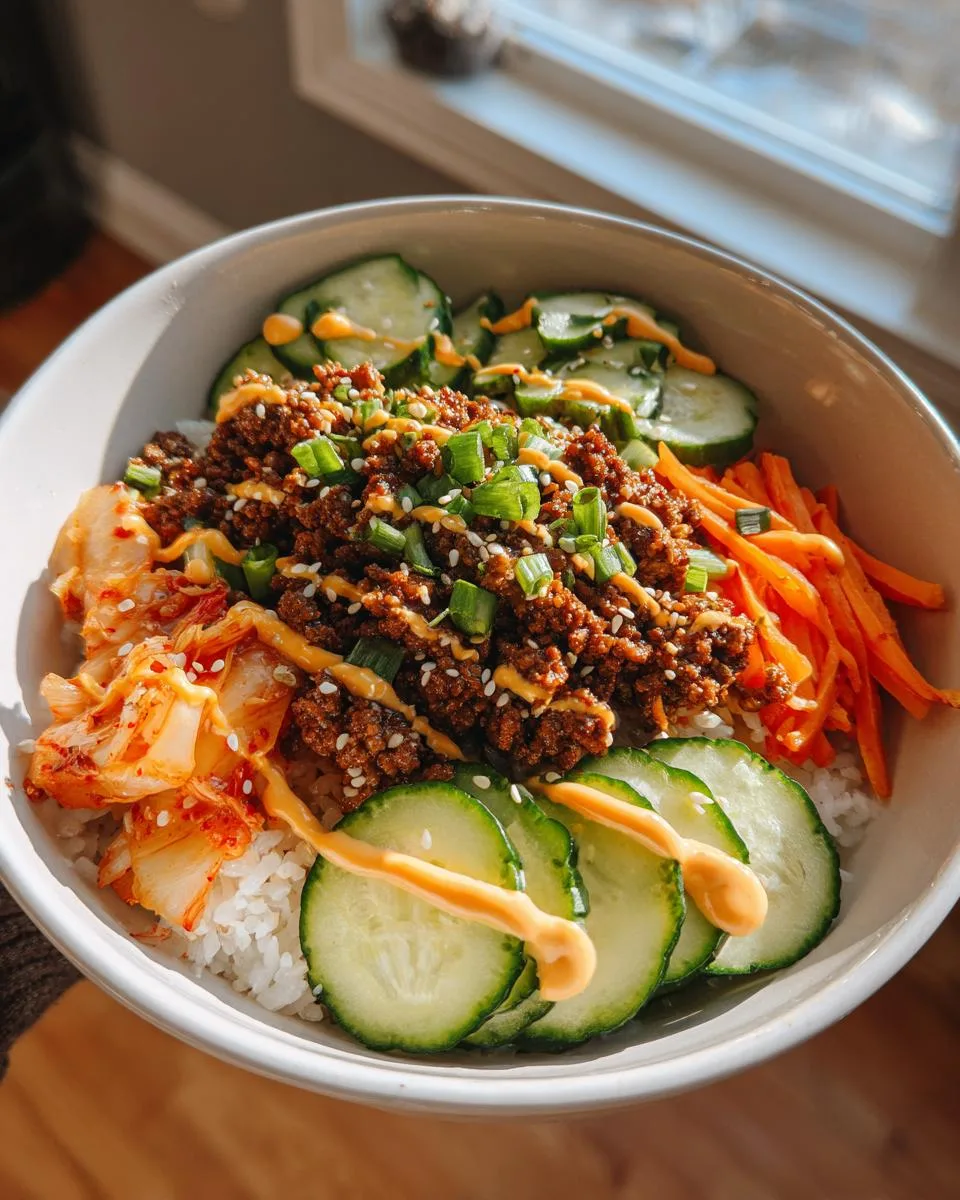
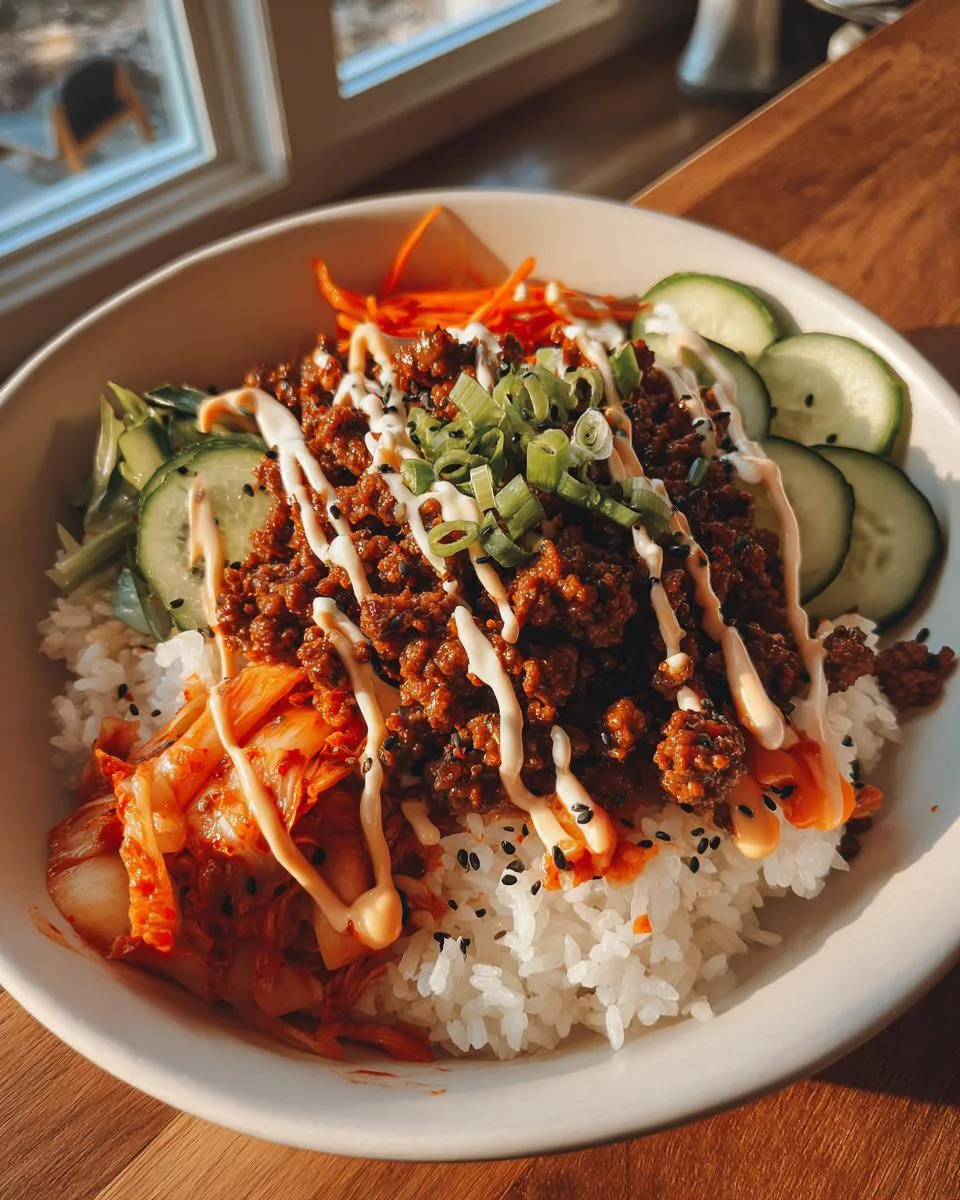
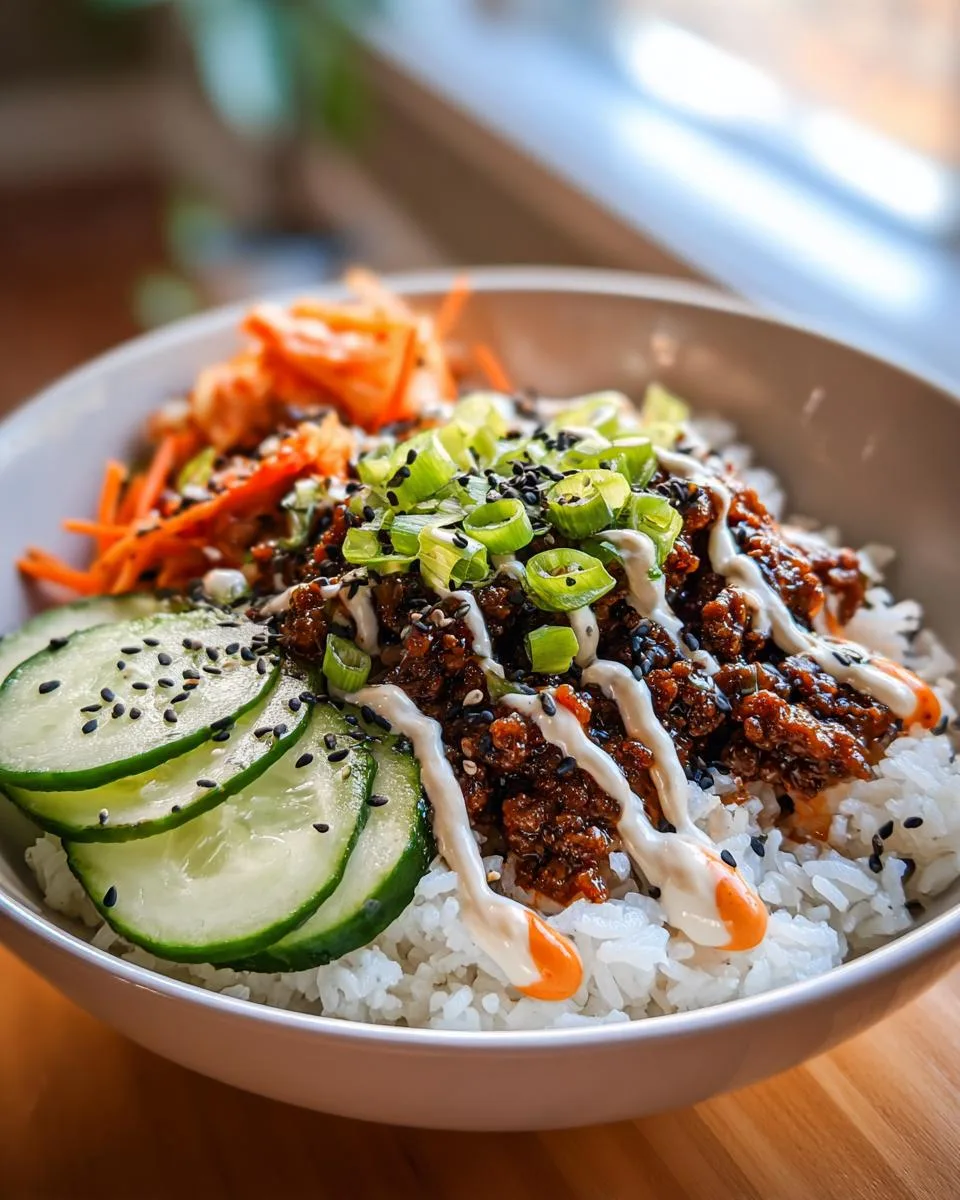
Time to make it pretty! Divide warm rice among bowls – I like to pack it into a small measuring cup first for that Instagram-worthy dome shape. Top with generous spoonfuls of the saucy beef. Arrange your kimchi, carrots, and cucumber around the edges – the colors should pop! Now drizzle that creamy gochujang mayo over everything (I put mine in a squeeze bottle for fancy zigzags). Finish with sesame seeds and the reserved spring onions. Serve immediately while everything’s hot and fresh – the contrast between warm beef and cool veggies is everything. Dig in and prepare for flavor fireworks!
Print
25-Minute Korean Beef Rice Bowls That Beat Takeout
A simple and flavorful Korean beef rice bowl with a spicy-sweet stir-fry sauce and a creamy gochujang mayo drizzle.
- Total Time: 25 minutes
- Yield: 4 servings 1x
Ingredients
- 1 tsp freshly grated garlic
- 1 tsp freshly grated ginger
- 3 tbsp all-purpose soy sauce
- 2 tbsp brown sugar
- 1 tbsp sesame oil
- 1 tbsp gochujang
- 1 tsp rice vinegar
- 1 tbsp sesame seeds, plus extra for garnish
- 2 tbsp extra-virgin olive oil or neutral oil
- 500 g (1 lb) minced beef
- 2 spring onions, finely sliced, 1 tbsp reserved for garnish
- 3 tbsp whole-egg mayonnaise
- 1 tsp gochujang
- ½ tsp sesame oil
- ½ tsp rice vinegar
- 2 cups (370 g) cooked jasmine rice
- 1 cup (240 g) kimchi
- 1 carrot, julienned
- 1 Lebanese cucumber, sliced into half moons
Instructions
- Whisk garlic, ginger, soy sauce, brown sugar, sesame oil, gochujang, rice vinegar, and sesame seeds in a small bowl. Set aside.
- Heat oil in a large frying pan over medium-high heat. Add beef and cook until browned, breaking it up.
- Pour the stir-fry sauce into the pan and stir to coat the beef. Simmer for 2–3 minutes until the sauce thickens. Turn off heat and stir in spring onion.
- Whisk mayonnaise, gochujang, sesame oil, and rice vinegar in a small bowl until smooth. Set aside.
- Divide rice among four bowls. Top with beef mixture, kimchi, carrot, and cucumber. Drizzle with mayo sauce and garnish with sesame seeds and spring onion. Serve immediately.
Notes
- Adjust gochujang amount for spice preference.
- Use dairy-free mayonnaise if needed.
- Prep Time: 15 minutes
- Cook Time: 10 minutes
- Category: Main Course
- Method: Stir-fry
- Cuisine: Korean
- Diet: Low Lactose
Nutrition
- Serving Size: 1 bowl
- Calories: 580
- Sugar: 12g
- Sodium: 980mg
- Fat: 28g
- Saturated Fat: 7g
- Unsaturated Fat: 18g
- Trans Fat: 0.5g
- Carbohydrates: 55g
- Fiber: 3g
- Protein: 28g
- Cholesterol: 75mg
Tips for Perfect Korean Beef Rice Bowls
After making these bowls more times than I can count (okay, maybe I have a problem), here are my foolproof tricks for restaurant-quality results every time:
- Don’t murder the beef: Cook just until no pink remains – overcooked beef turns into sad little pebbles
- Gochujang gateway: Start with half the amount if you’re new to Korean spice – you can always add more
- Sesame power: Toast your sesame seeds in a dry pan for 30 seconds – the nutty aroma will blow your mind
- Rice rules: Use slightly less water when cooking rice – you want distinct grains, not mush
- Veggie prep: Pat cucumber slices dry so your mayo drizzle sticks instead of sliding off
Follow these simple tips and your Korean beef rice bowls will be better than any takeout – pinky promise!
Serving Suggestions for Korean Beef Rice Bowls
Now here’s where we take these Korean beef rice bowls from great to “are you sure you didn’t order this from that little place in Koreatown?” amazing! I love serving mine with an assortment of banchan (those addictive little Korean side dishes). My must-haves:
- Quick-pickled radish – that tangy crunch cuts through the richness
- Blanched bean sprouts with a drizzle of sesame oil
- Steamed greens like bok choy or spinach with garlic
- Extra kimchi (because there’s never enough)
Arrange everything on the table family-style – the colors and textures make every bite exciting. And don’t forget the soju or iced barley tea for the full experience! You can see more of my favorite family recipes over at Grandma and Me Cooking.
Storage & Reheating Instructions
Here’s the deal – these Korean beef rice bowls taste best fresh, but I totally get meal prep life! Store everything separately in airtight containers: beef in one, rice in another, and toppings in their own little homes. The beef keeps beautifully for 3 days in the fridge.
When reheating, go low and slow! Microwave the beef at 50% power with a splash of water to keep it juicy. Rice revives best with the damp paper towel trick – 30 seconds, check, repeat. Pro tip: assemble bowls cold and let the hot beef warm everything through. That mayo drizzle? Always add it fresh!
Korean Beef Rice Bowls FAQs
I get asked these questions ALL the time – usually while friends are shoveling bites into their mouths and gesturing wildly at their bowls. Here’s everything you need to know:
Can I use chicken instead of beef?
Absolutely! Ground chicken or turkey works beautifully – just add 1 tbsp extra oil since it’s leaner. Cook time stays about the same, but watch closely – poultry dries out faster than beef. Pro tip: mix in ½ tsp cornstarch with the sauce to help it cling better to the lighter meat.
Is gochujang gluten-free?
Great question! Traditional gochujang often contains wheat, but gluten-free versions exist – just check labels carefully. My favorite brand is Chung Jung One’s gluten-free option (the packaging clearly states it). When in doubt, tamari + extra chili flakes can approximate the flavor in a pinch.
What’s the best rice for Korean beef bowls?
I swear by jasmine rice – its floral notes complement the spicy-sweet beef perfectly. But authentic Korean short-grain rice (like Nishiki) creates that dreamy sticky texture we all love. Honestly? Use what you’ve got! Even brown rice works if that’s your jam – just adjust cooking times accordingly.
Nutritional Information
Okay, let’s talk numbers – but remember, these are estimates based on my kitchen scale and calculator (not a lab!). Your actual counts might vary depending on exact ingredients and how generous you are with that delicious gochujang mayo drizzle!
Here’s the breakdown per serving (that’s one loaded Korean beef rice bowl):
- Calories: 580 (but packed with flavor, so totally worth it)
- Protein: 28g (thanks to that beefy goodness)
- Carbs: 55g (mostly from the rice – use cauliflower rice if you’re watching carbs)
- Sugar: 12g (mostly from the brown sugar in the sauce)
- Sodium: 980mg (the soy sauce and kimchi contribute here)
- Fat: 28g (7g saturated – sesame oil and beef do their thing)
Now, here’s my nutritionist friend’s favorite tip: balance this rich bowl with lighter meals throughout your day. Or don’t – I won’t judge if you have seconds! Just enjoy every flavorful bite knowing you’re getting protein, veg, and carbs all in one delicious package.