Oh man, let me tell you about the first time I tried making Korean BBQ steak rice bowls at home! I was craving those bold, savory-sweet flavors after eating out at a Korean spot, but didn’t want to deal with complicated steps or hard-to-find ingredients. Turns out, this dish is shockingly easy to throw together—and totally customizable based on what you’ve got in the fridge.
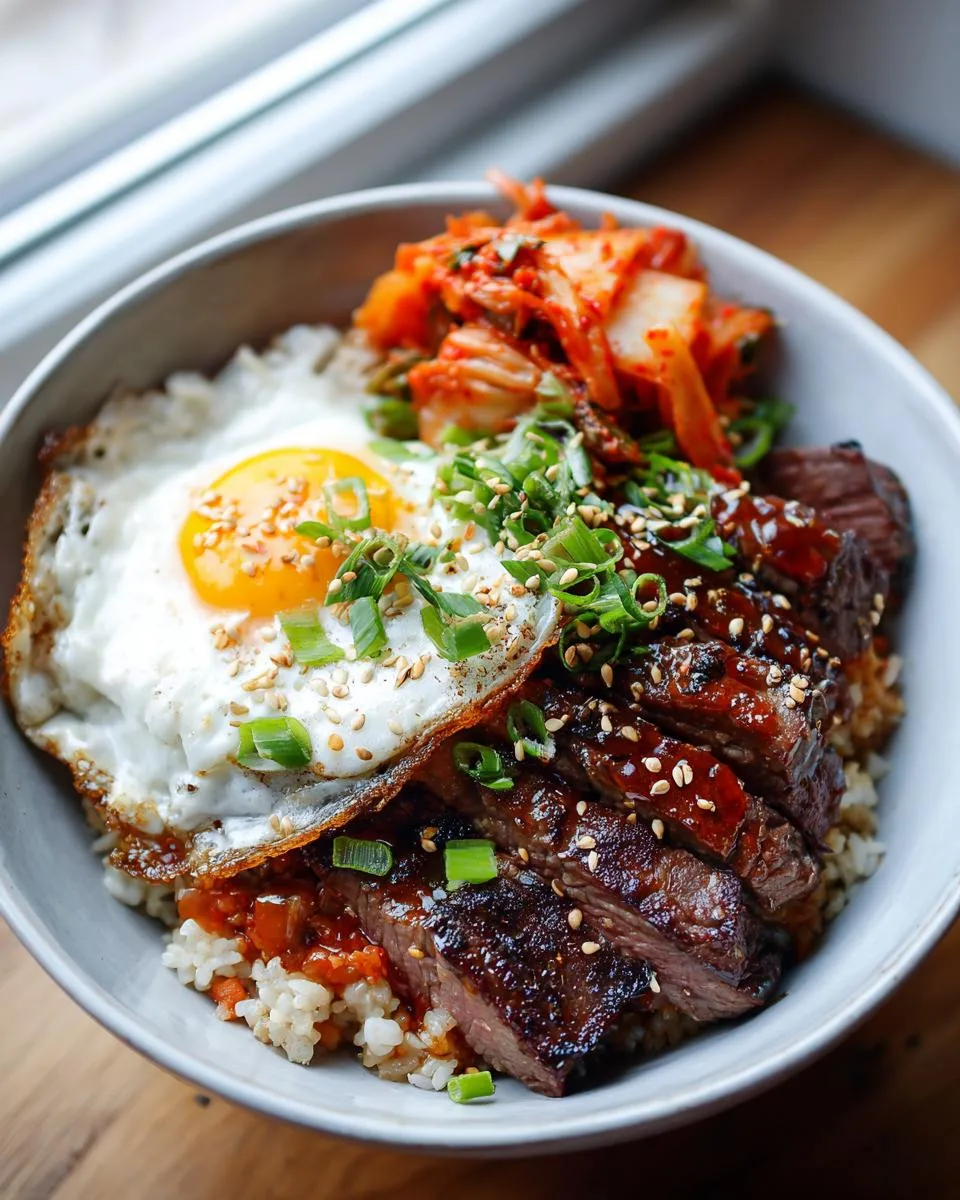
Table of Contents
Table of Contents
Why You’ll Love These Korean BBQ Steak Rice Bowls
I remember nervously slicing the rib-eye that first time (pro tip: pop it in the freezer for 20 minutes first—game changer!), and then being blown away by how the marinade transformed it. That combo of soy sauce, garlic, ginger, and pear? Absolute magic. And the best part? You don’t need a fancy grill—just a screaming hot skillet and about 10 minutes. The sizzle, the smell, the way the edges get those perfect crispy bits… I’m getting hungry just thinking about it!
Now I make these bowls at least twice a month because they’re faster than takeout and everyone can build their own perfect bite. Load up on kimchi if you like it spicy, go heavy on the sesame seeds if you’re all about texture, or add an extra egg if you’re feeling fancy. This isn’t just dinner—it’s a flavor party in a bowl, and you’re invited.
Listen, I’m not exaggerating when I say these Korean BBQ steak rice bowls will become your new weeknight hero. Here’s why this recipe gets a permanent spot in my rotation:
- Faster than takeout: From marinade to bowl in under an hour (and 30 minutes of that is just the steak soaking up all that glorious flavor while you relax)
- Customizable like crazy: Swap the kimchi for pickled veggies if you want, skip the egg if you’t feeling it – this recipe won’t judge
- Restaurant-worthy flavors at home: That perfect caramelized crust on the steak? The tangy-spicy kick from the kimchi? You’ll swear you’re at your favorite Korean BBQ joint
- Meal prep superstar: The components keep beautifully – I often double the steak and use leftovers for next-day fried rice or lettuce wraps
- Crowd-pleaser magic: Serve everything family-style and watch even picky eaters go back for seconds (my nephew who “hates onions” somehow devours these every time)
Seriously, once you taste that first bite of tender, sweet-savory steak with fluffy rice and a runny yolk? You’ll wonder how something so simple could pack so much flavor. And when your friends start begging you for the recipe? Just wait – it’ll happen.
Korean BBQ Steak Rice Bowls Ingredients
Okay, let’s gather up everything you’ll need to make these flavor-packed bowls happen. I’ll walk you through each component so there are no surprises at the grocery store!
- 2 lbs. rib-eye steak or tenderloin (sliced into thin, bite-sized pieces – trust me, freezing for 20 minutes first makes this WAY easier)
- 8 cloves garlic (peeled and roughly chopped – don’t skimp here!)
- 1/4 red onion (thinly sliced – purple onions work too if that’s what you’ve got)
- 1 3-inch piece ginger (peeled and roughly chopped – no need to be precious about removing every bit of skin)
- 2 Asian or Bosc pears (peeled, cored, and roughly chopped – this is the secret sweetener that makes the marinade magical)
- 1/2 cup soy sauce (use reduced-sodium if you’re watching salt)
- 1/4 cup brown sugar (packed – dark brown adds more molasses depth)
- 2 Tbs Agave (or honey if that’s what’s in your pantry)
- 2 tablespoons sesame oil (the toasted kind – it makes ALL the difference)
- Rice (as needed) (short-grain white rice is my go-to for that perfect sticky texture)
- Kimchi (as needed) (go for spicy if you can handle it – the tang cuts through the richness beautifully)
- 6-minute soft-cooked eggs (poached or fried – that runny yolk is non-negotiable in my book)
- Sesame seeds (as needed) (for that satisfying crunch)
- Scallions (as needed) (thinly sliced on a diagonal – makes it pretty AND tasty)
- Yum Yum Sauce (as needed) (store-bought is fine, but homemade takes 2 minutes and tastes incredible)
Ingredient Notes & Substitutions
Don’t stress if you can’t find exactly what’s listed – Korean cooking is all about adaptability! Here’s my cheat sheet for swaps:
Meat options: Can’t find rib-eye? Sirloin works great too. Want it leaner? Go for tenderloin. Vegetarian? Try thick slices of portobello mushrooms marinated the same way.
Sweetener swaps: Out of agave? Honey works perfectly. No brown sugar? White sugar plus a teaspoon of molasses mimics the flavor.
Dietary tweaks: Need gluten-free? Use tamari instead of soy sauce. Watching sugar? Cut the brown sugar to 2 tablespoons and add an extra pear.
Pear panic: No Asian pears? Regular ripe pears work fine – just avoid ones that are too mushy. In a pinch, 1/4 cup apple sauce can substitute.
The beauty of these bowls is how forgiving they are. As long as you’ve got that killer marinade base (soy + sweet + garlic/ginger), you’re golden. Now let’s get slicing!
How to Make Korean BBQ Steak Rice Bowls
Alright, let’s get cooking! Making Korean BBQ steak rice bowls is easier than you think—I swear it’s mostly just waiting while the marinade works its magic. Here’s exactly how I do it:
- Prep your steak: Pop that rib-eye in the freezer for about 20 minutes (this makes slicing paper-thin pieces WAY easier). Meanwhile, get your rice cooking—I use a rice cooker because lazy genius.
- Blitz the aromatics: Toss your garlic, ginger, and peeled pears into a food processor and pulse until it’s a fragrant paste. No processor? A fine grater works too, just prepare for some arm workout.
- Mix the marinade: In a big bowl, whisk together soy sauce, brown sugar, agave, and sesame oil. Stir in that glorious garlic-ginger-pear paste until smooth. Smell that? That’s happiness in liquid form.
- Marinate time!</strong: Add your thinly sliced steak and onions to the bowl, massaging the marinade into every nook and cranny. Cover and refrigerate for at least 30 minutes (but up to 4 hours if you’re patient—the flavor gets deeper the longer it sits).
- Searing showtime: Heat a heavy skillet (cast iron is my MVP) over screaming high heat. Working in batches (don’t crowd the pan!), sear the steak for 1-2 minutes per side until caramelized and slightly charred at the edges. That sizzle sound? Music to my ears.
- Egg duty: While the steak rests, cook your eggs—I prefer 6-minute soft boiled for that perfect jammy yolk, but fried works too if you’re in a rush.
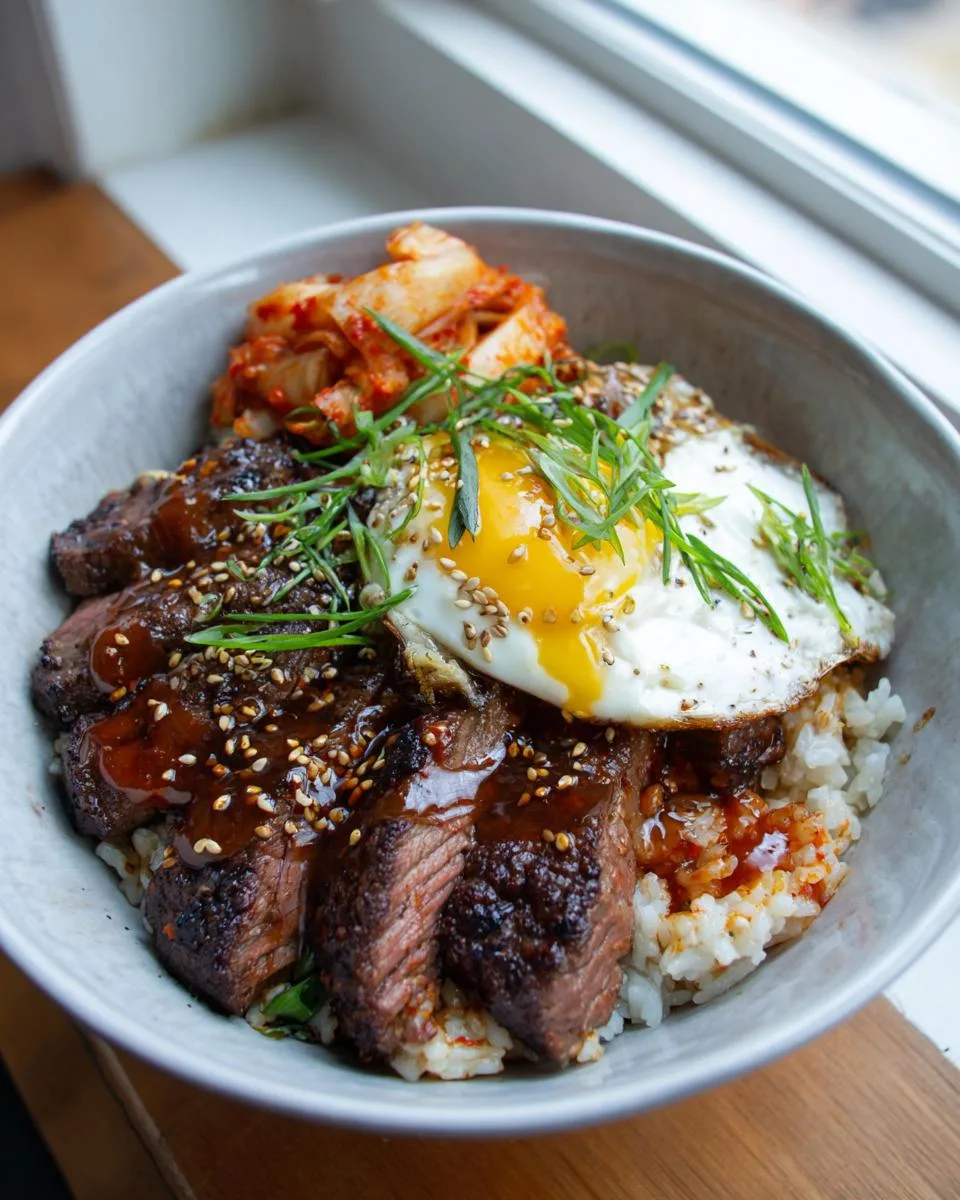
- Bowl assembly: Pile fluffy rice in bowls, top with seared steak, kimchi, that beautiful egg, and sprinkle liberally with sesame seeds and scallions. Drizzle with Yum Yum sauce if you’re feeling extra.
Pro Tips for Perfect Steak
After making these Korean BBQ steak rice bowls probably 50 times, here are my hard-earned secrets for steak success:
Freeze before slicing: That 20-minute freezer stint firms up the meat so you get paper-thin, even slices without tearing. No小刀 skills required!
Skillet temperature is everything: I wait until my cast iron is literally smoking before adding the first batch of meat. You want that instant sear for maximum caramelization.
Work in batches: I know it’s tempting to dump all the meat in at once, but overcrowding = steaming instead of searing. Patience gives you those perfect crispy edges.
Don’t touch it! Resist the urge to stir the steak constantly. Let it sit for a full minute before flipping to develop that beautiful crust.
Rest before serving: Let the cooked steak rest for 5 minutes before slicing—those juices need time to redistribute so every bite stays juicy.
Follow these steps, and I promise you’ll get restaurant-quality Korean BBQ steak every single time. Now go forth and make some delicious magic!
Print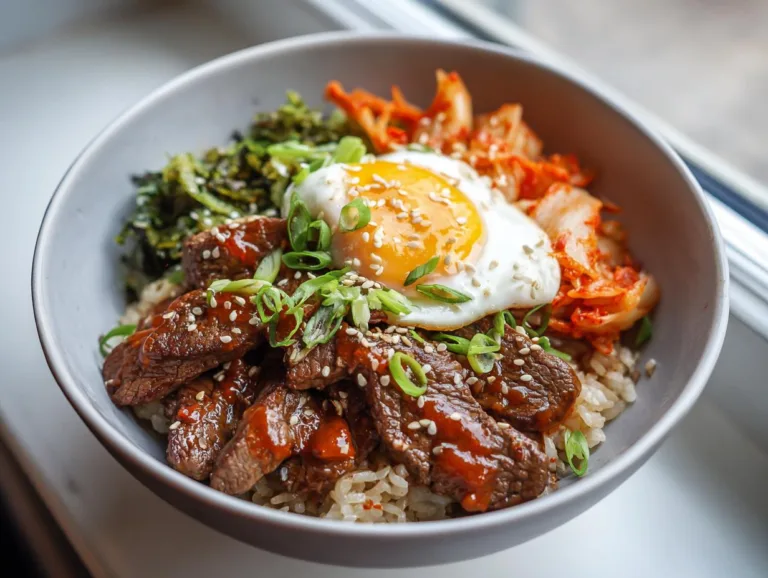
Savory Korean BBQ Steak Rice Bowls You’ll Crave Daily
A flavorful Korean BBQ steak rice bowl with marinated rib-eye steak, kimchi, and soft-cooked eggs.
- Total Time: 50 minutes
- Yield: 4 servings 1x
Ingredients
- 2 lbs. rib-eye steak or tenderloin
- 8 cloves garlic
- 1/4 red onion
- 1 3-inch piece ginger
- 2 Asian or Bosc pears
- 1/2 cup soy sauce
- 1/4 cup brown sugar
- 2 Tbs Agave
- 2 tablespoons sesame oil
- Rice (as needed)
- Kimchi (as needed)
- 6-minute soft-cooked eggs (poached or fried)
- Sesame seeds (as needed)
- Scallions (as needed)
- Yum Yum Sauce (as needed)
Instructions
- Cut steak into thin bite-sized pieces and place in a bowl.
- Slice red onion thinly and add to the meat.
- Peel garlic, ginger, and pears, then pulse in a food processor until smooth.
- Mix soy sauce, brown sugar, and sesame oil, then pour over meat.
- Refrigerate for 30 minutes.
- Heat a skillet over high heat and sear steak until browned.
- Assemble bowls with rice, kimchi, steak, egg, sesame seeds, scallions, and Yum Yum Sauce.
Notes
- Freeze meat slightly before slicing for easier handling.
- Adjust marinade time for deeper flavor.
- Use short-grain rice for best texture.
- Prep Time: 40 minutes
- Cook Time: 10 minutes
- Category: Main Dish
- Method: Stovetop
- Cuisine: Korean
- Diet: Low Lactose
Nutrition
- Serving Size: 1 bowl
- Calories: 650
- Sugar: 18g
- Sodium: 1200mg
- Fat: 32g
- Saturated Fat: 10g
- Unsaturated Fat: 18g
- Trans Fat: 0g
- Carbohydrates: 55g
- Fiber: 4g
- Protein: 42g
- Cholesterol: 220mg
Serving Suggestions
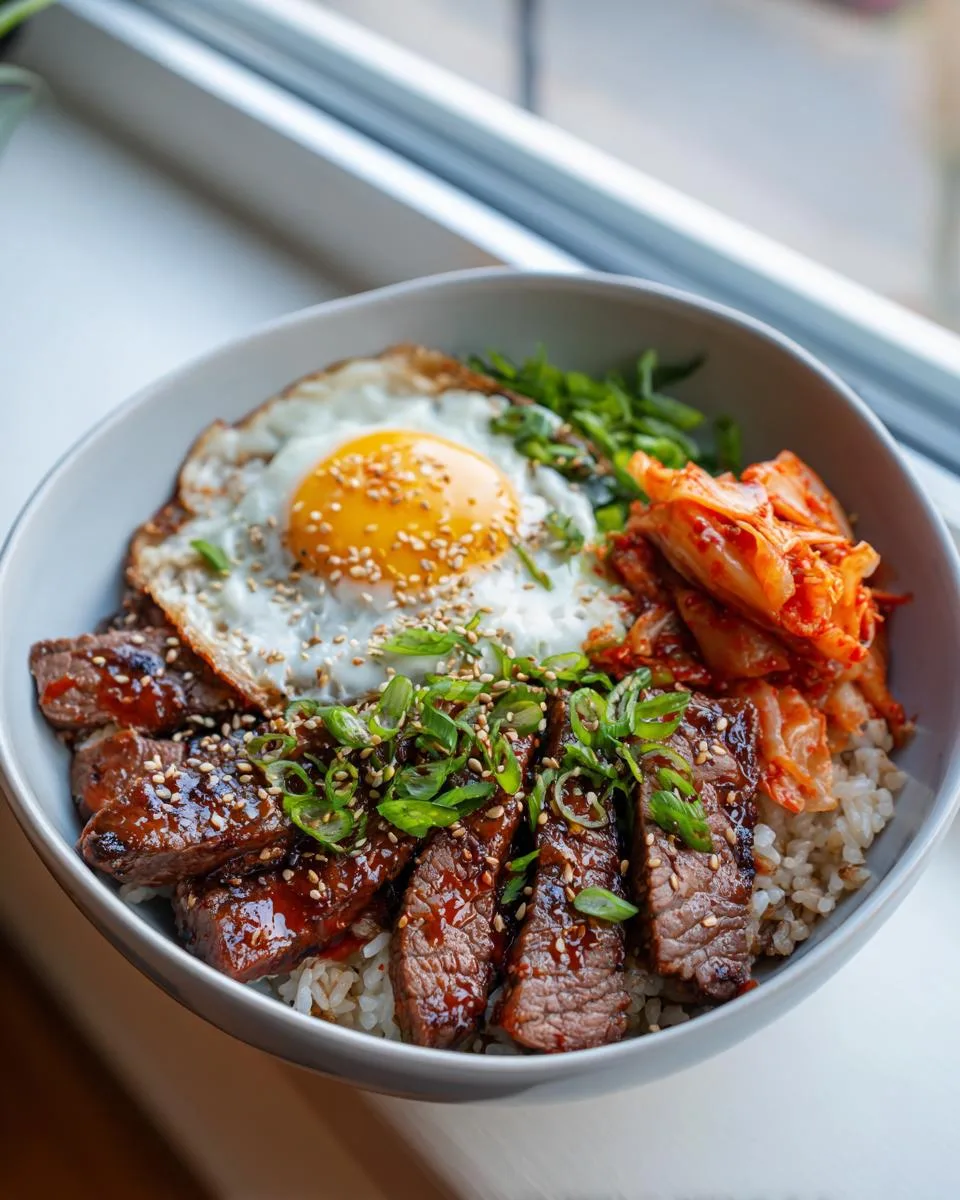
Okay, here’s where the real fun begins – making these Korean BBQ steak rice bowls look as amazing as they taste! I always set everything up buffet-style so everyone can build their perfect bowl. Here’s how I like to serve them:
- The kimchi situation: Keep extra kimchi on the side for those who want more kick (like me!). The fermented cabbage adds crunch and probiotics – bonus!
- Pickled veggie party: Quick-pickled cucumbers or radishes add bright acidity. I just slice them thin and soak in rice vinegar with a pinch of sugar for 15 minutes.
- Greens on the side: A simple butter lettuce salad with sesame dressing balances the richness perfectly. Or go full bibimbap and add spinach!
- Sauce bar: Little bowls of gochujang (for heat lovers), extra Yum Yum sauce, and plain sesame oil let people customize their flavor adventure.
- Texture town: Crispy fried shallots, crushed peanuts, or even those crunchy Asian salad toppers add fun contrast to the tender steak.
Presentation pro tip: Use wide, shallow bowls so all the gorgeous components stay visible. I layer rice first, then artfully arrange steak slices around the edges before adding the egg right in the center (poke that yolk right before eating – ohhhh yes). Scatter sesame seeds and scallions over everything like edible confetti.
And don’t forget drinks! I love serving these with:
- Iced barley tea (traditional Korean pairing)
- Crisp lager beer (cuts through the richness)
- Sparkling water with lime (for a refreshing non-alc option)
Honestly? Half the joy of these bowls is admiring your creation before digging in. Take a pic – it’ll last longer than the food will!
Storage & Reheating
Here’s the truth – these Korean BBQ steak rice bowls are so dang delicious, leftovers rarely happen in my house. But when they do (or when I’m smart enough to meal prep extra), here’s how I keep everything tasting fresh:
Storage savvy: Keep components separate if possible! I stash the steak in one airtight container, rice in another, and toppings in little snack bags. Everything stays good in the fridge for 3 days max (kimchi lasts longer, obviously).
Reheating magic: When you’re ready for round two, gently warm the steak in a skillet over medium-low heat with a splash of water or broth to keep it moist. Microwaving turns it rubbery – trust me, I learned the hard way. Rice gets revived with a damp paper towel over it for 30-second bursts.
Egg situation: Soft-boiled eggs don’t reheat well تحت أي ظرف (that’s “under any circumstances” – my attempt at Arabic from cooking shows!). If you planned ahead, keep some uncooked eggs in the fridge to make fresh when reheating. Or just fry a new one – takes 2 minutes!
Freezer hack: The marinated raw steak freezes beautifully for up to 2 months. Thaw overnight in the fridge, then cook as usual. Cooked steak can be frozen too, but loses some texture – better for fried rice later.
Leftover remix ideas: Stale? Never! Toss everything into a hot skillet with day-old rice for killer kimchi fried rice Zac. Or wrap the steak in lettuce leaves with gochujang for quick ssam. My favorite? Scramble it all into eggs for a breakfast bowl that’ll make you forget it’s leftovers.
Pro tip: The flavors actually deepen overnight! That marinade keeps working its magic, so don’t be surprised if lunch next day tastes even better. Just promise me you’ll reheat gently – your taste buds will thank you.
Korean BBQ Steak Rice Bowls FAQs
I get asked about these Korean BBQ steak rice bowls ALL the time—here are the answers to the questions that keep popping up (along with some of my snark-free opinions!):
What kind of steak works best for Korean BBQ?
Rib-eye is my go-to for that perfect balance of tenderness and flavor, but tenderloin works great too if you want something leaner. Honestly? Any well-marbled cut that slices thin will shine in this marinade.
Short-grain vs. long-grain rice—does it matter?
Oh, absolutely! Short-grain (like sushi rice) gives that perfect sticky texture that holds everything together in the bowl. Long-grain works in a pinch, but it won’t have that signature chew.
Can I make these bowls vegetarian?
Try thick portobello slices or extra-firm tofu marinated the same way! The key is getting that caramelized crust—just watch the cooking time since mushrooms release more water.
How spicy is this supposed to be?
That’s the beauty—you control the heat! Mild kimchi keeps it family-friendly, or go nuts with extra gochujang drizzle if you’re into that fiery tingle (like me).
What’s the deal with the pear in the marinade?
Asian pears contain enzymes that naturally tenderize the meat while adding subtle sweetness. No pear? A kiwi works too (but only marinate 30 mins max—it works FAST).
Can I prep components ahead?
The marinated steak keeps 2 days in the fridge (flavor gets BETTER), and kimchi lasts forever. Just cook everything fresh when you’re ready to assemble—especially that egg!
Still got questions? Slide into my DMs—I could talk Korean BBQ bowls all day. Now go forth and make some deliciousness!
Nutritional Information
Okay, let’s talk numbers – but remember, I’m a home cook, not a dietitian! These estimates are based on my standard portions and brands I use, so your mileage may vary (especially if you go wild with the Yum Yum sauce like I sometimes do). Here’s the breakdown per hearty serving:
- Calories: 650 (but honestly? Worth every single one)
- Protein: 42g (that steak packs a punch!)
- Fat: 32g (10g saturated – mostly from the rib-eye and sesame oil)
- Carbs: 55g (mostly from the rice and pear marinade)
- Fiber: 4g (thanks, kimchi!)
- Sugar: 18g (mostly natural from the pears and brown sugar)
- Sodium: 1200mg (use reduced-sodium soy sauce if you’re watching this)
Important notes from my kitchen experiments:
- Skipping the egg saves about 70 calories
- Using cauliflower rice instead of white rice cuts carbs nearly in half
- Extra kimchi adds negligible calories but major flavor
- Those sesame seeds? Only about 15 calories per sprinkle!
Bottom line? This isn’t diet food, but it’s packed with real ingredients that keep you satisfied. And between you and me? Sometimes delicious > perfect macros. Now pass me another bowl!
Final Thoughts
Alright, friends – we’ve reached the end of our Korean BBQ steak rice bowl journey together! If you take away just one thing from all this, let it be this: you absolutely need to make these bowls immediately. Like, cancel your dinner plans tonight and get slicing that rib-eye.
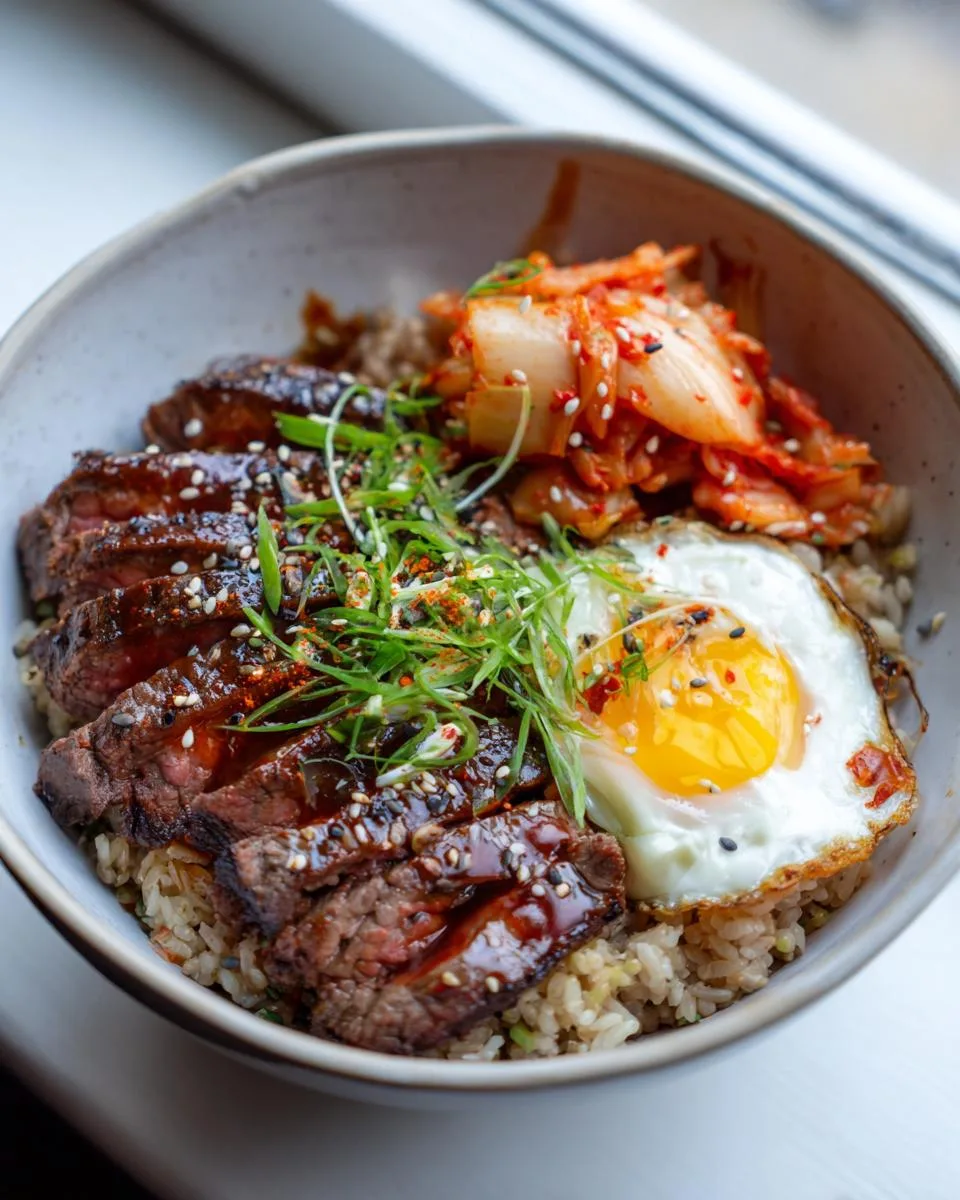
I’m not kidding when I say this recipe changed my weeknight dinner game forever. That first bite of caramelized steak with kimchi tang and a burst of runny yolk? Pure magic. And the best part? Even my most cooking-averse friends can nail this recipe – it’s that foolproof.
Promise me you’ll tag me when you make these (@myfoodobsession, obviously). I want to see your bowl creations, your proud steak sear shots, your yolk-poke videos! And if you discover any brilliant tweaks? Share them in the comments – I’m always looking for new ways to level up this recipe.
One last pro tip before I let you go: double the steak marinade next time. Trust me, you’ll want leftovers for breakfast fried rice tomorrow. Now grab those ingredients and get cooking – your new favorite meal is waiting!